


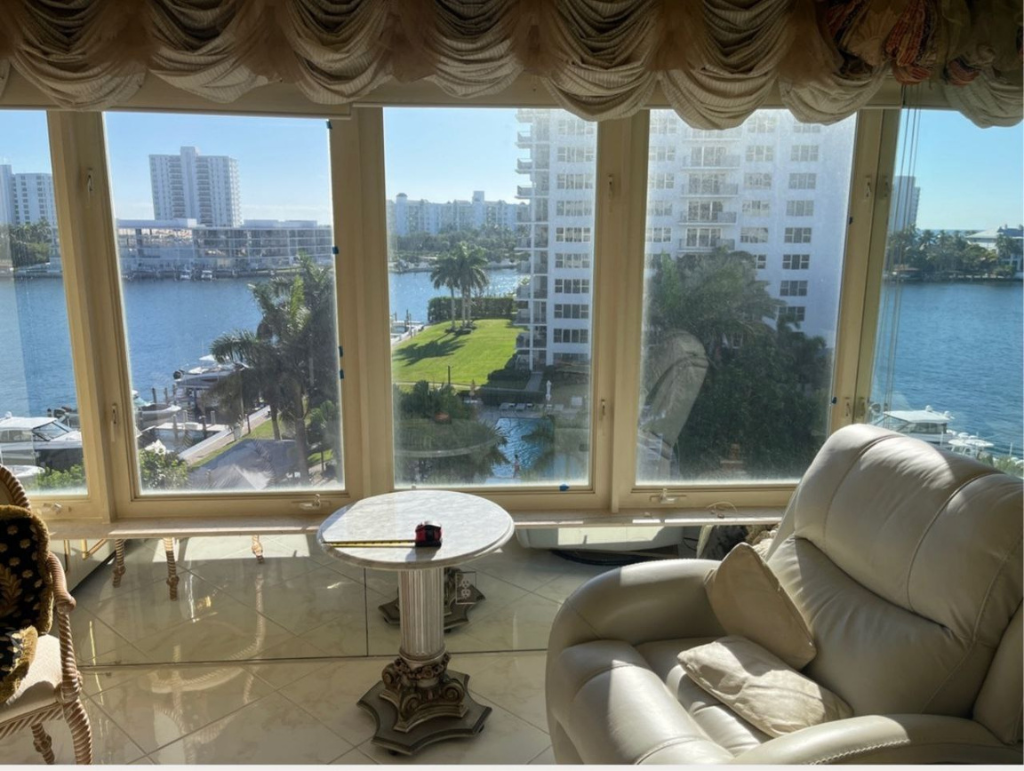
In South Florida’s climate — with intense sun, heavy rain, and high humidity — window caulk deteriorates faster than in most parts of the country. Cracked, missing, or improperly applied caulk is one of the most common causes of water intrusion, air leakage, and mold growth in residential and commercial buildings. Atlantic Window Repair provides professional window caulking services throughout Palm Beach, Broward, and Miami-Dade counties.
Signs You Need Window Caulking
- Visible cracks, gaps, or separation in caulk around window frames
- Paint peeling or bubbling near window edges
- Water stains on interior walls or windowsills after rain
- Drafts or outside air felt around closed windows
- Higher-than-expected energy bills
- Mold or mildew growth on interior window frames or walls
- Caulk that has yellowed, hardened, or shrunk away from the surface
Caulking Materials We Use
Silicone Caulk
100% silicone is the gold standard for exterior window sealing. It remains flexible through extreme temperature cycles, bonds strongly to glass, metal, and painted surfaces, and resists UV degradation. Not paintable, but available in clear and standard colors. Lifespan: 20–30 years when properly applied.
Siliconized Latex (Paintable Silicone)
A blend of silicone flexibility and latex paintability. Excellent adhesion, fully paintable once cured. A good choice for interior applications and painted wood frames. Lifespan: 10–20 years.
Polyurethane Caulk
Extremely durable and paintable. Bonds well to masonry, concrete, and stucco — common in South Florida construction. More rigid than silicone; best used where movement is minimal. Lifespan: 10–20 years.
Butyl Rubber Caulk
Used for flashing applications and sealing around metal window flanges during installation. Not typically used for finish caulking.
Expected Lifespan by Material
- 100% Silicone: 20–30 years
- Siliconized Latex: 10–20 years
- Polyurethane: 10–20 years
- Standard acrylic latex (not recommended for exterior): 5–7 years
Note: In South Florida’s UV intensity and thermal cycling, all caulk materials perform toward the lower end of their stated lifespan relative to northern climates. Professional application significantly extends service life compared to DIY application.
Our Caulking Process
- Inspect all window perimeters and identify failed or missing sealant.
- Remove all old caulk mechanically and with solvent — thorough removal is essential for new caulk adhesion.
- Clean and dry surfaces completely.
- Apply backer rod where gap depth requires it.
- Apply caulk in a continuous bead, tooled smooth for proper surface contact and a clean finish.
- Final inspection and cleanup.
Frequently Asked Questions
How often should window caulk be replaced in South Florida?
Given the intensity of UV exposure and temperature cycling in South Florida, we recommend inspecting caulk every 3–5 years and planning for full replacement every 7–10 years with silicone, or every 5–7 years with latex-based products.
Can bad caulking actually cause water damage?
Yes — it’s one of the most common causes of water intrusion around windows. Over time, even small gaps allow wind-driven rain to penetrate, which can damage wall framing, insulation, and interior finishes.
Can I just caulk over old caulk?
Not effectively. Applying new caulk over old caulk that has failed rarely creates a durable seal. The old caulk must be fully removed for the new material to bond properly.
Do you caulk interior and exterior?
Yes. We caulk both the exterior perimeter (critical for waterproofing) and the interior trim joint (important for air sealing and appearance) as needed.
Is caulking enough to stop a window leak?
Caulking addresses exterior seal failure, which is the most common cause of window leaks. If the leak is coming from a failed glazing compound, failed sill flashing, or a cracked frame, those issues need to be addressed as well. We assess the full situation during our inspection.